When Foggy Glass Means It Is Time for a Change
If you have noticed a cloudy, milky layer between the panes of your double-pane window, you are looking at seal failure in action. That foggy glass is not just an eyesore. It means the airtight barrier that keeps your window energy-efficient has broken down. Moisture has leaked in, the desiccant inside the spacer is saturated, and the gas fill that once boosted thermal performance has escaped. At this point, many homeowners wonder whether they can patch things up or if they need a full insulated glass unit replacement.
I have worked on windows across the DFW area for years, and I can tell you that once the seal is compromised, no amount of cleaning or temporary sealant will restore the original performance. The glass itself might still be clear on the outside, but the damage is structural and invisible. That is why understanding what goes into a proper repair or replacement matters. It affects your comfort, your energy bills, and the long-term value of your home.
How a Double-Pane Window Works
A modern double-pane window is not just two pieces of glass stuck together. It is a carefully engineered assembly. The two panes are separated by a spacer that holds a layer of desiccant. The space between the panes is filled with an insulating gas, typically argon gas, which slows heat transfer far better than plain air. The edges are sealed with a durable window sealant, and the whole unit sits inside a frame seal that keeps everything stable.
When that edge seal fails, the gas fill leaks out and humid air creeps in. The desiccant absorbs what moisture it can, but once it is full, condensation forms inside the cavity. That trapped moisture leaves mineral deposits on the glass, creating the foggy glass look. The thermal efficiency drops dramatically. In winter, you feel the cold radiating from the window. In summer, your air conditioner works harder. Over time, the condensation can even damage the frame or the surrounding wall.

Repair versus Replacement: What Actually Works
Some companies offer defogging services that drill tiny holes into the glass, clean the interior, and reseal the unit. I have seen mixed results with that approach. It can clear the fog temporarily, but the structural integrity of the original seal is gone. The gas fill cannot be replaced through a small hole, so you end up with plain air between the panes. The thermal efficiency never returns to where it was. And the reseal itself often fails again within a year or two.
For most situations, a full insulated glass unit replacement is the better long-term solution. You get new glass, fresh desiccant, a proper argon gas fill, and a factory-quality edge seal. The window performs like new. The labor is similar for both options, and the material cost for a replacement unit is not drastically higher than a defogging attempt. The difference is in the result. One gives you a temporary fix. The other restores the window to its original specs.
Signs That Your Units Are Past Due
How do you know when it is time to stop living with foggy glass? There are a few clear indicators. First, if you see condensation between the panes that does not clear up on warm, dry days, the seal is definitely broken. Second, if you notice a draft around the window even when it is closed, the frame seal or the glass unit itself may be compromised. Third, if the glass feels noticeably cold to the touch in winter compared to other windows in the same room, the thermal efficiency has dropped. Fourth, if you have tried cleaning the outside and the fog persists, there is no surface dirt to blame. And fifth, if the window is under a window warranty, you may be eligible for a free replacement, so it is worth checking before you pay out of pocket.
In my experience, homeowners often wait too long. They think the fog will dry out on its own, or they assume the window is just old. But the seal failure only worsens over time. Moisture inside the cavity can lead to mold growth on the spacer or even corrosion of the low-e coating. By the time you see etching on the glass, the unit is beyond salvage.
What a Proper Replacement Involves
A professional glass replacement begins with glass unit removal. The old glass is taken out of the frame carefully to avoid damaging the sash or the surrounding structure. The frame is cleaned and inspected. Any old silicone sealant or window sealant residue is removed so that the new unit sits flush. The new insulated glass unit is then installed with fresh sealant around the edges. A good installer will also check the frame seal and the weep holes to ensure proper drainage.
The new unit itself should include tempered glass for safety, especially in vertical windows or sliding glass doors. Tempered glass is much stronger than standard annealed glass, and if it does break, it shatters into small, blunt pieces rather than sharp shards. Many replacement units also come with low-e coating, which reflects heat back into the room in winter and keeps it out in summer. Double glazing with low-e coating and argon gas can improve a window’s insulation value by a significant margin compared to old single-pane or failed double-pane windows.
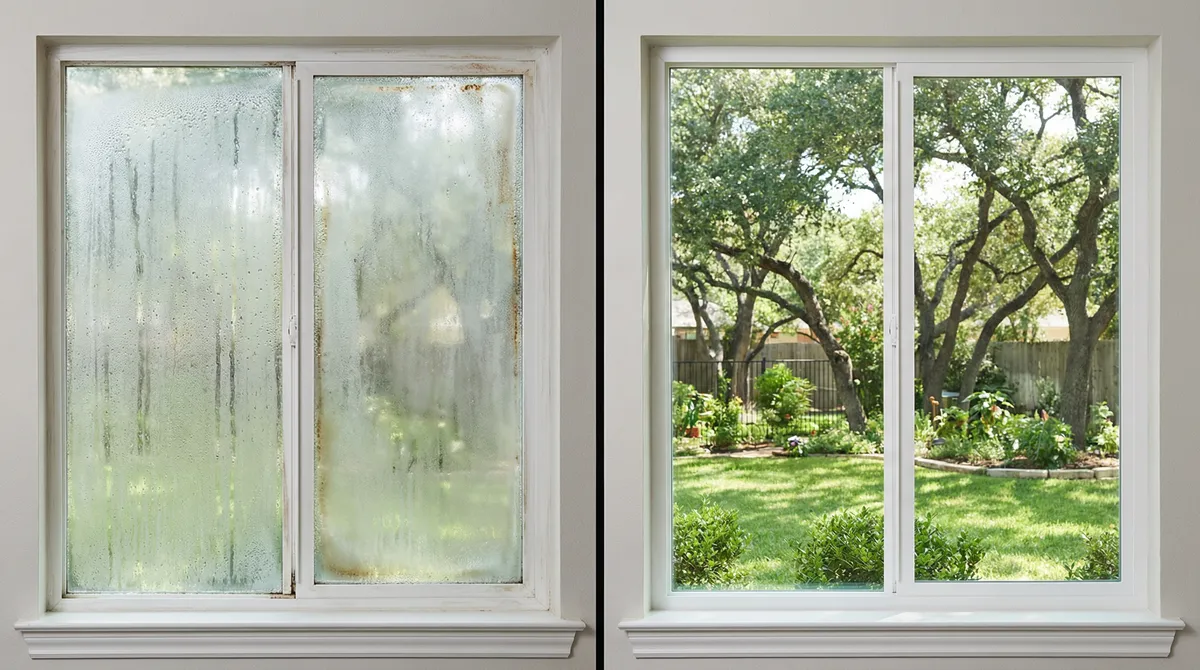
One question people often ask is whether they can replace just the glass and keep the old frame. In many cases, yes. As long as the frame is in good shape and not rotting or warped, a glass-only replacement is the most cost-effective route. It avoids the expense and hassle of tearing out the entire window assembly. That is where a company like Apex Windows comes in, offering free estimates and handling the whole process from measurement to final seal.
Common Mistakes to Avoid
I have seen homeowners try to seal a foggy window from the outside with caulk, hoping to stop the moisture. That does not work because the moisture is already inside the cavity. The only way to fix it is to open the unit, clean it, and reseal it with fresh desiccant and gas fill, or simply replace the whole unit. Another mistake is ordering a replacement without checking the gas fill specifications. If you live in a hot climate like Dallas, argon gas makes a real difference in how much heat transfers through the glass. Skipping it to save a few dollars will cost you more in energy bills over time.
There is also the temptation to replace only the most obviously foggy windows and leave others that look fine. But if the windows are the same age and were installed at the same time, the seals on the clear ones may be failing too. You might end up with a staggered replacement schedule that costs more in the long run because of multiple service calls. It is worth having all the windows evaluated at once. Many companies will give a discount on multiple units.
When to Call a Professional
Some handy homeowners can handle basic window repairs, but insulated glass unit replacement is not a DIY job for most people. The glass is heavy and fragile. The measurement needs to be exact within a millimeter. The sealant application has to be consistent to prevent future leaks. And handling tempered glass without proper tools and training can be dangerous. A professional team will also have access to the right gas fill equipment and know how to handle low-e coatings without damaging them.
If you are in the DFW area and your windows are showing signs of seal failure, it is worth getting a free estimate from a reputable glass company. They can tell you which units can be repaired and which need full replacement. They can also advise you on whether your windows are still under a window warranty, which might save you the cost of the glass entirely.

The Bottom Line on Insulated Glass Unit Replacement
Dealing with foggy glass is frustrating, but the solution is straightforward. A proper insulated glass unit replacement restores the thermal efficiency, clears the view, and protects your home from moisture damage. It is an investment in comfort and energy savings that pays for itself over time. Whether you have a single vertical window that is clouded or a whole row of sliding glass doors that have lost their clarity, the process is the same. Measure, order the right unit with the correct gas fill and coating, remove the old glass, and install the new one with care.
Do not let condensation and drafts drive up your energy bills or ruin your view. If you see the signs of seal failure, act sooner rather than later. A few hours of work can give you years of clear, efficient windows.